
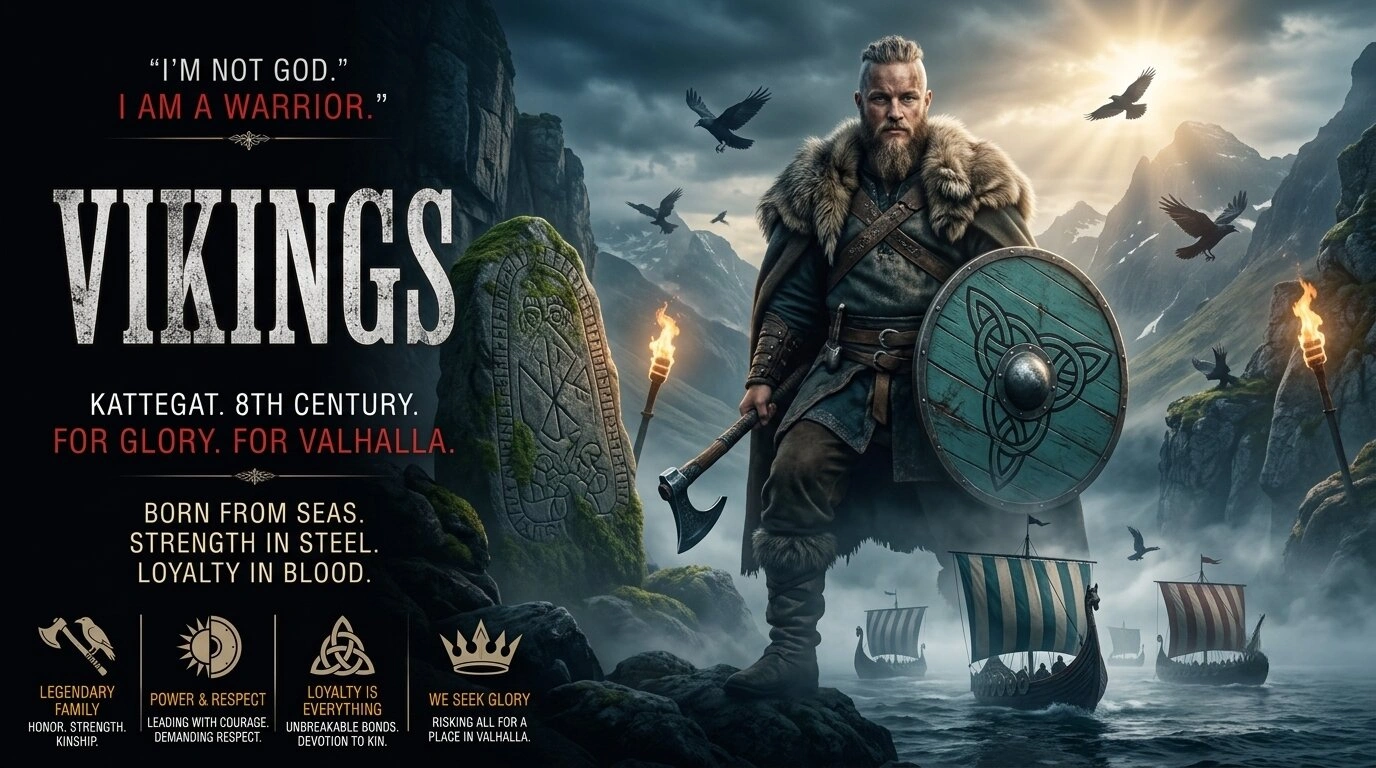
Vikings is one of the most iconic historical drama television series ever created. Developed by Michael Hirst, the series follows the legendary Norse hero Ragnar Lothbrok and his descendants as they explore new lands, fight epic battles, and shape Viking history.
Combining action, adventure, political intrigue, and unforgettable storytelling, Vikings became a worldwide phenomenon and earned a dedicated global fan base.
What Is Vikings About?
The story begins with Ragnar Lothbrok, a fearless Viking farmer who dreams of sailing west in search of new lands and riches.
As Ragnar rises from an ordinary warrior to one of the most powerful Viking leaders, he faces fierce enemies, political rivalries, betrayals, and personal sacrifices.
Later seasons continue the saga through the adventures of his sons, who seek to honor their father's legacy while forging their own paths across Europe.
Main Characters
Vikings features an unforgettable cast of legendary characters, including:
- Ragnar Lothbrok
- Lagertha
- Bjorn Ironside
- Ivar the Boneless
- Ubbe Ragnarsson
- Hvitserk
- Floki
- Rollo
- King Ecbert
- Harald Finehair
Each character plays a major role in the political struggles, wars, and exploration that define the Viking Age.
Why Is Vikings So Popular?
The series became a global success because of:
- Epic battle scenes.
- Rich historical atmosphere.
- Outstanding performances.
- Emotional storytelling.
- Spectacular cinematography.
- Complex characters.
- Political intrigue and strategy.
Its mix of history, mythology, and action has made it one of the greatest historical dramas ever produced.
A Story of Exploration, Power, and Legacy
Beyond its battles, Vikings explores themes of leadership, loyalty, family, ambition, faith, revenge, and destiny.
The series portrays the Viking Age through dramatic storytelling while highlighting the cultural traditions and beliefs of the Norse people.
Is Vikings Worth Watching?
Absolutely. Whether you're a fan of historical dramas, medieval warfare, or epic adventures, Vikings offers an unforgettable experience filled with action, emotion, and legendary characters.
Its cinematic production and compelling narrative continue to attract new viewers around the world.
Where Can You Watch Vikings?
Vikings is available on licensed streaming platforms depending on your region, including Netflix, Prime Video, and other official streaming services.
Vikings is an epic tale of courage, exploration, ambition, and family that captures the spirit of the Viking Age.
Frequently Asked Questions
Is Vikings based on real history?
The series is inspired by historical events and legendary Norse sagas, while incorporating fictional elements for dramatic storytelling.
Who is Ragnar Lothbrok?
Ragnar Lothbrok is the central character of the early seasons and one of the most famous legendary Viking heroes.
What genre is Vikings?
Historical Drama, Action, Adventure, and War.
How many seasons does Vikings have?
The original series consists of 6 seasons.
Why is Vikings so popular?
Its unforgettable characters, epic battles, emotional storytelling, historical atmosphere, and exceptional production quality have made it one of the most beloved historical television series.
Final Thoughts
Vikings is far more than a historical drama. It is an epic tale of courage, exploration, ambition, and family that captures the spirit of the Viking Age. With legendary characters, breathtaking battles, and emotional storytelling, it remains one of the greatest historical television series ever produced.
Want to watch epic historical dramas and thousands of live channels?
Pair your favorite streaming apps with Crystal IPTV's 20,000+ live channels — all on the same device.
Related Articles

Off-Campus – Everything You Need to Know About Elle Kennedy's Bestselling Romance Series
Discover everything about the Off-Campus book series, including its story and characters.
Read article →
Yargı – Everything You Need to Know About the Award-Winning Turkish Legal Drama
Discover everything about Yargı, including its story, cast, and characters.
Read article →