Searching for the "best IPTV service" turns up hundreds of providers promising thousands of channels for a few dollars a month. Some are excellent. Many are unreliable, disappear after a few months, or simply don't have the server infrastructure to keep a stream stable during a Sunday night football game. So how do you actually tell the difference before you hand over your money?
This guide breaks down the exact criteria that separate a genuinely good IPTV provider from a risky one — so you know what to check before subscribing to any service, including ours.
1. Server infrastructure and anti-freeze technology
The single biggest complaint about cheap IPTV services is buffering and freezing, especially during high-traffic events. This almost always comes down to server capacity. A provider running on a handful of overloaded servers will crumble the moment thousands of subscribers tune into the same live sports event.
Look for providers that mention load balancing, multiple server locations, or "anti-freeze" technology — this usually means your stream automatically reroutes to a healthy server if one becomes congested, rather than leaving you stuck on a frozen frame.
2. Real channel count vs. marketing numbers
"25,000 channels" sounds impressive, but the number that actually matters is how many of those channels are active, in your language, and in a resolution you'll actually watch. A well-organized 15,000-channel lineup with a clean EPG (electronic program guide) beats a bloated, disorganized 40,000-channel list every time.
- Does the provider list major sports, movie, and international categories clearly?
- Is there a 7-day EPG so you can plan ahead instead of guessing what's on?
- Is the VOD (movies & series) library updated regularly, or stuck on last year's releases?
3. Device compatibility
The best IPTV services work everywhere you already watch TV — no need to buy new hardware. At minimum, check that a provider supports:
- Amazon Firestick / Fire TV
- Android phones, tablets, and TV boxes
- Apple devices (iPhone, iPad, Apple TV)
- Samsung and LG Smart TVs
- Windows and Mac computers
- MAG boxes and Enigma2 receivers, if you use one
If a provider only supports one or two device types, that's a red flag — it usually means a small, underdeveloped app ecosystem.
4. Real customer support, not just a sales chat
A lot of IPTV sellers are responsive right up until you pay — then support disappears. Before subscribing, test their support channel with a real question about setup or devices and see how quickly and clearly they respond. 24/7 availability on WhatsApp or live chat is a strong signal that a company is built to actually support subscribers, not just close sales.
5. No long-term contracts
Because IPTV is a prepaid, month-to-month style service, there is rarely a good reason for a provider to lock you into a long contract. The best services let you start with a short plan, test the quality on your own devices, and only commit to a longer (and cheaper per-month) plan once you're confident.
6. Transparent, all-inclusive pricing
Watch for hidden setup fees, "activation" charges, or per-device surcharges that aren't mentioned upfront. Good providers show exactly what's included — channel count, VOD library, device support, and support hours — next to a clear price for each plan length.
The best IPTV service for you is the one that's transparent about pricing, has real infrastructure to prevent freezing, and answers your questions before you've even paid.
How Crystal IPTV stacks up
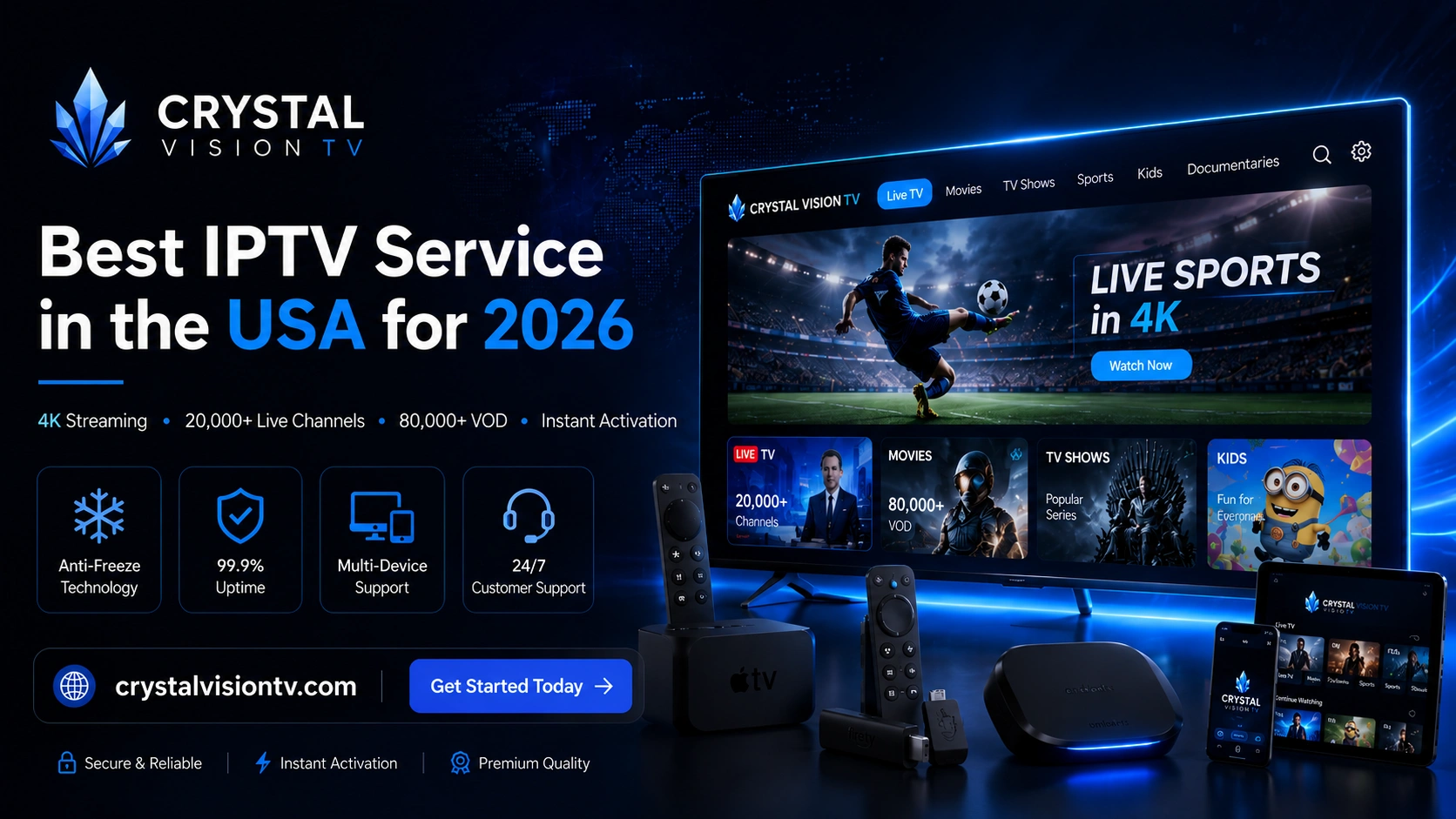
We built Crystal IPTV around these exact criteria: 20,000+ live channels and 100,000+ VOD titles organized behind a clean 7-day EPG, anti-freeze multi-server streaming, support for every major device, no contracts, and a real human support team available 24/7 on WhatsApp. Plans start at $12.99/month, with bigger savings on 3, 6 and 12-month plans.
If you want to see the quality for yourself before committing, message us on WhatsApp — we'll set you up with a trial so you can test everything on your own TV, phone, or Firestick first.
Ready to try Crystal IPTV?
Chat with our team and get streaming in minutes — no contracts, no risk.
Related Articles
IPTV vs. Cable & Satellite: What's Really Better in 2026?
A side-by-side breakdown of cost, channel count, flexibility and quality between IPTV and traditional TV.
Read article →
How to Install IPTV on Firestick, Android & Smart TV
A simple, step-by-step setup guide to get Crystal IPTV running on your device in under 10 minutes.
Read article →