
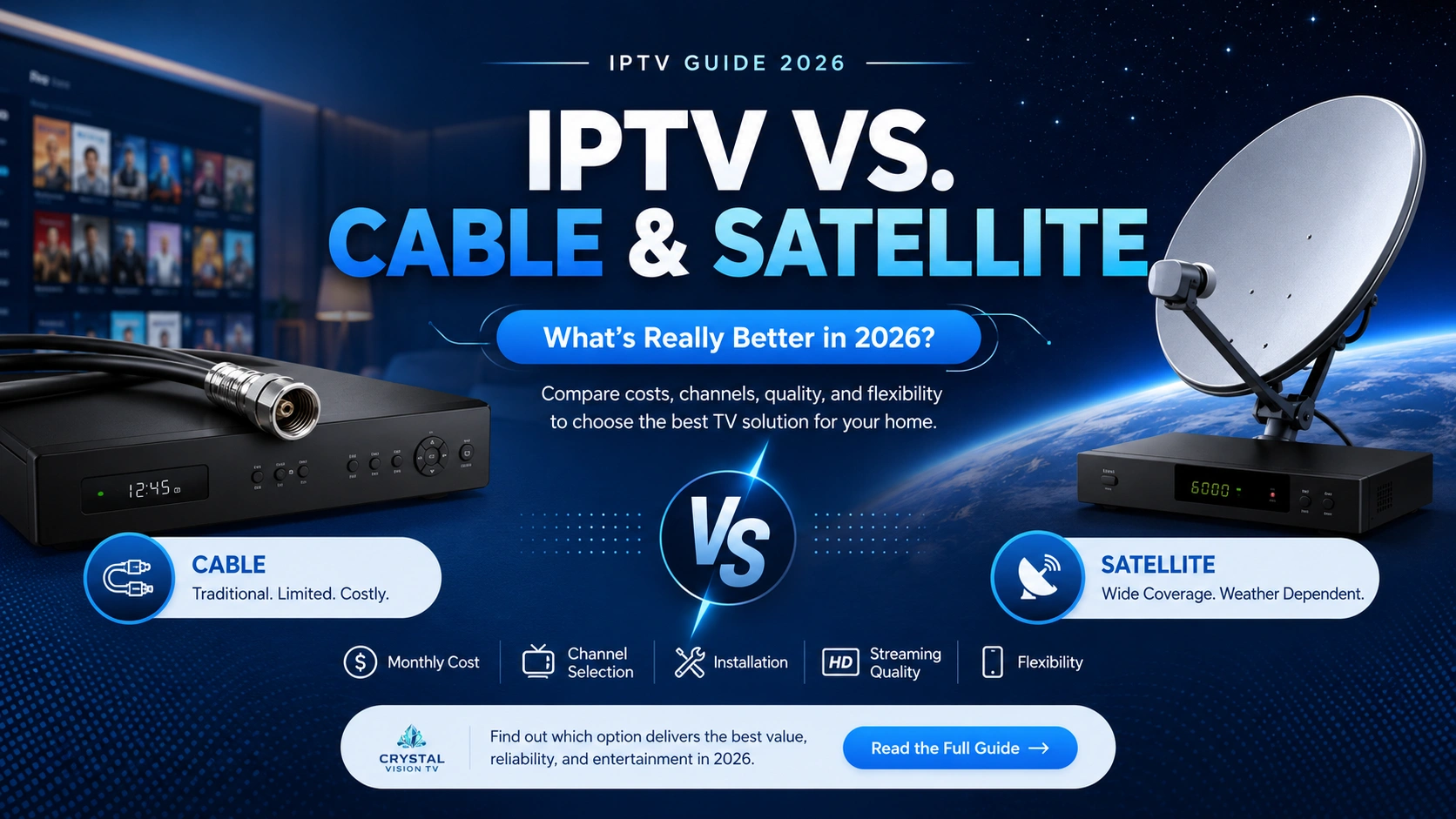
Millions of households have already cut the cord, and the reasons are almost always the same: cable and satellite bills keep climbing, contracts feel restrictive, and half the channels in the package never get watched. IPTV has stepped in as the modern alternative — but is it actually better, or just cheaper? Here's an honest, category-by-category comparison.
Monthly cost
This is the most obvious difference. The average cable or satellite bill in the US now regularly exceeds $80-$150 per month once regional sports fees, equipment rental, and taxes are added. IPTV plans, by comparison, typically start under $15/month and drop further with longer commitments — Crystal IPTV's 12-month plan works out to under $6/month.
Channel selection
Cable and satellite packages are built around regional licensing deals, which is why you're often paying for 200+ channels but only ever watching a dozen. IPTV providers aggregate content from a much wider pool, typically offering 15,000-20,000+ channels spanning sports, international content, movies and niche categories that traditional providers simply don't carry.
Contracts & equipment
Traditional TV providers usually require 12-24 month contracts, early termination fees, and rented set-top boxes. IPTV runs on an app you install on hardware you likely already own — a phone, Smart TV, or Firestick — with no contract and no equipment rental fees.
Installation & setup time
Cable and satellite installs often require scheduling a technician visit, sometimes days out. IPTV setup is self-service: download the app, enter your login details, and you're watching TV in minutes.
Streaming quality
This is where IPTV quality varies the most between providers. Traditional cable and satellite have decades of dedicated infrastructure, so quality is consistent by design. IPTV quality depends entirely on your internet connection and the provider's server infrastructure — a well-run IPTV service with anti-freeze, multi-server technology can match or exceed cable quality in 4K, but a poorly run one will buffer constantly. This is the single most important factor to evaluate before choosing a provider.
Flexibility
Cable is tied to the box in your living room. IPTV travels with you — the same subscription typically works on your TV at home, your phone on the go, and a laptop when you're traveling, all from one login.
| IPTV (Crystal) | Cable / Satellite | |
|---|---|---|
| Avg. monthly cost | From $12.99 | $80-$150+ |
| Channel count | 20,000+ | 150-300 |
| Contract | None | 12-24 months |
| Setup | Minutes, self-service | Days, technician |
| Multi-device | Yes | Limited |
So which is really better?
For most households, IPTV wins on cost, flexibility, and channel variety — as long as you choose a provider with reliable server infrastructure and real customer support. Cable and satellite still have an edge in guaranteed consistency since they don't depend on your home internet connection, so if your internet is unstable, that's worth factoring in.
If you have a stable connection of 15 Mbps or more, switching to a well-run IPTV service is very likely to save you money while giving you access to far more content than your current cable package.
See the difference for yourself
Message us on WhatsApp for a trial and compare the quality on your own TV before you switch.
Related Articles
Best IPTV Service in the USA for 2026
What to actually look for in an IPTV provider before you subscribe — channels, quality, support and more.
Read article →
How to Install IPTV on Firestick, Android & Smart TV
A simple, step-by-step setup guide to get Crystal IPTV running on your device in under 10 minutes.
Read article →